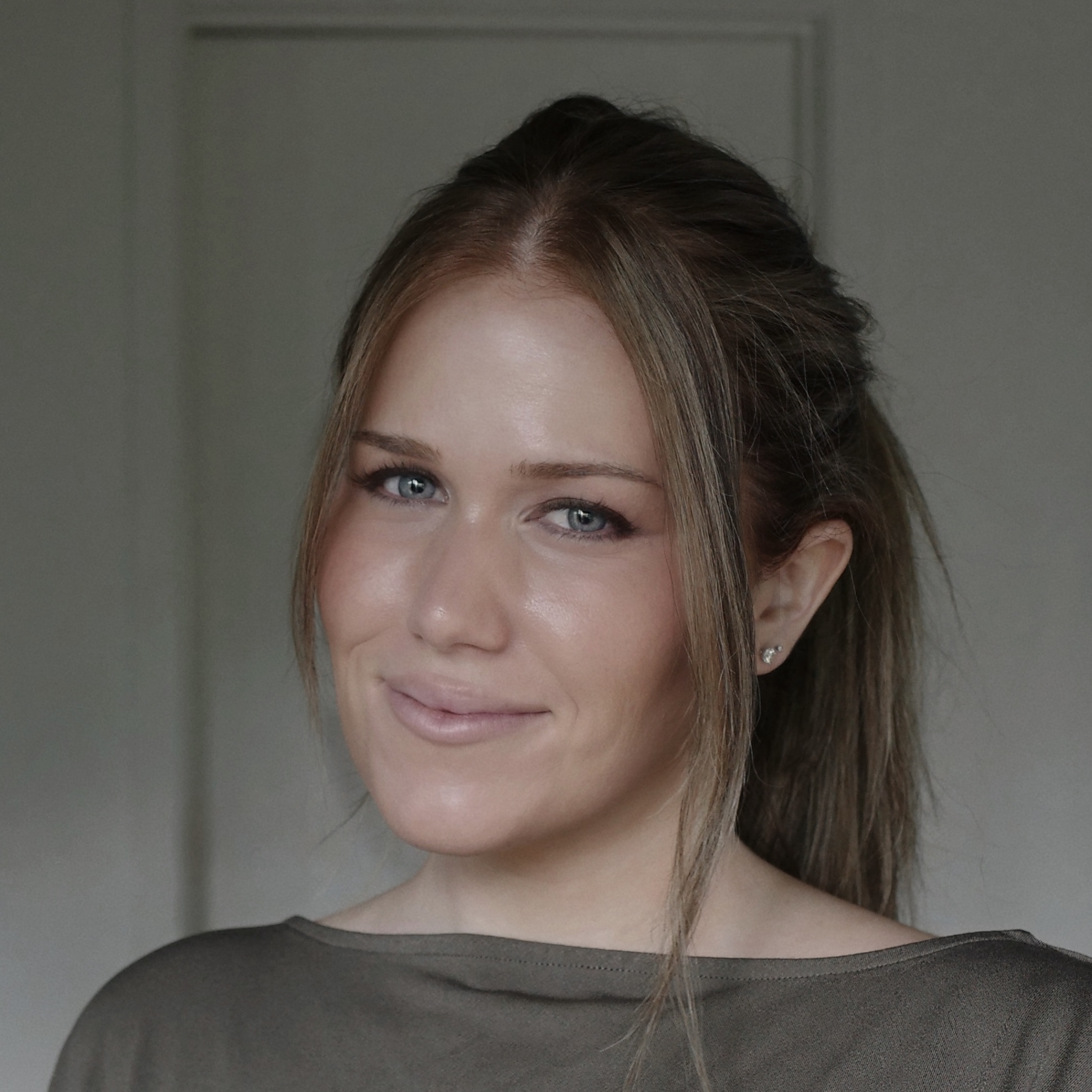
Katherine Delno
About
I am a statistician with an M.S. in Statistics from the University of Washington and a B.S. in Mathematics from the University of Nevada, Reno. My academic work has ranged from mathematical statistics and statistical inference to methodological research, causal inference, and statistical learning, with extensive computational work in R and Python.
I work independently as a researcher and statistician, and I am available for research positions, collaborations, and project-based analytical work. I also continue to teach a small number of students in mathematics and statistics.
From Mathematics to Statistics
Mathematics did not come easily to me in school. For years, its notation and methods felt arbitrary, as though the task were to follow rules whose underlying reasons remained obscure.
What eventually held my attention was the structure beneath those procedures: why an argument works, which assumptions a method depends on, and how seemingly different ideas relate to one another. That interest led me first to mathematics and later to statistics.
Statistics introduced a different set of questions. What can be inferred from incomplete observations? Under what assumptions are those inferences justified? How can we distinguish a result that is statistically detectable from one that is substantively meaningful? I became particularly interested in the theoretical foundations of statistical methods and the relationship between their mathematical properties and their behavior in practice.
Academic Training
M.S. Statistics
Graduate study at the University of Washington brought together the mathematical theory of statistical inference and methods for analyzing complex data. The theoretical inference sequence involved deriving estimators, hypothesis tests, and confidence procedures, studying their statistical properties, and examining the conditions under which their conclusions are justified. Particular emphasis was placed on likelihood-based inference, large-sample approximations, and the mathematical foundations of estimation and uncertainty quantification.
My coursework also encompassed regression and generalized linear models, longitudinal and correlated data, experimental design, categorical data analysis, causal inference, biostatistics, statistical learning, and statistical computing. These subjects introduced related questions of model specification, dependence, identification, and the interpretation of statistical evidence. Bayesian methods, simulation, resampling, and computational model evaluation provided additional approaches to studying statistical procedures and their behavior.
Programming in R and Python was integral to my graduate work, from simulation studies and statistical modeling to applied machine learning. My independent methodological research allowed me to pursue a statistical problem beyond the application of established procedures, developing and evaluating a diagnostic method through computational experimentation and analysis of its operating characteristics.
B.S. Mathematics
My undergraduate studies established a mathematical foundation through proof-based coursework in real analysis, linear algebra, differential equations, probability, mathematical statistics, numerical methods, and mathematical modeling.
Two semesters of real analysis were particularly formative. The subject develops the foundations of calculus through precise definitions and proofs, including the study of convergence, continuity, differentiation, and integration. It requires close attention to the logical structure of an argument and to the conditions under which a mathematical result holds.
My specialization in statistics extended that mathematical training toward probability, estimation, and statistical modeling, providing the foundation for the more advanced theoretical and computational work I later pursued at the University of Washington.
Research
My graduate research included independent methodological development and applied projects in causal inference, statistical learning, and uncertainty quantification.
My principal independent project, RandomForestSpecCheck, involved developing and evaluating a permutation-based diagnostic for mean-structure misspecification in linear mixed models. The work combined statistical modeling, random forests, simulation-based evaluation, and an examination of the conditions under which the proposed method was informative.
Other projects examined causal identification and estimation in observational data, as well as transformer-based classification and conformal prediction.
Interests
The thread running through my work, inside statistics and beyond it, is the relationship between evidence and interpretation: how conclusions are drawn from incomplete information, and how far a given body of evidence can be trusted to carry them.
Beyond statistical methodology, I am interested in perception, aesthetics, and the ways people interpret and assign meaning to objects, information, and experiences. Questions of this kind are often treated as purely subjective, though many of them can be examined with care. How a product's materials, typography, and price come to signal craft or luxury, or how the goods in a category converge on a shared visual language, are partly empirical questions, open to structured comparison as well as to judgment. These interests inform my growing focus on interdisciplinary research at the intersection of quantitative analysis, design, and consumer behavior.
I am also interested in the theoretical foundations and evaluation of artificial intelligence, particularly the behavior of large language models. Questions of reasoning, reliability, and generalization raise familiar statistical problems concerning measurement, uncertainty, and the interpretation of evidence. I am especially interested in the distinction between apparent competence and reliable performance, and in how these properties can be meaningfully evaluated.
These questions meet in philosophy, particularly epistemology and the philosophy of science. What counts as evidence, what justifies an inference, and what would warrant attributing knowledge or understanding to a computational system are questions I return to often.
Teaching
I began teaching statistics at the University of Nevada, Reno, where I served as a teaching assistant for undergraduate statistics. Later, as a mentor in the Statistics & Probability Directed Reading Program at the University of Washington, I designed and led an individualized course in statistical learning.
I established my independent teaching practice in 2025 and now work with a small number of students in mathematics and statistics.
Working individually with students allows me to observe how their reasoning develops: how they approach an unfamiliar problem, where uncertainty enters, and whether an idea remains understood when the form of a problem changes. My teaching emphasizes conceptual structure and mathematical justification alongside procedural proficiency.
Outside of Work
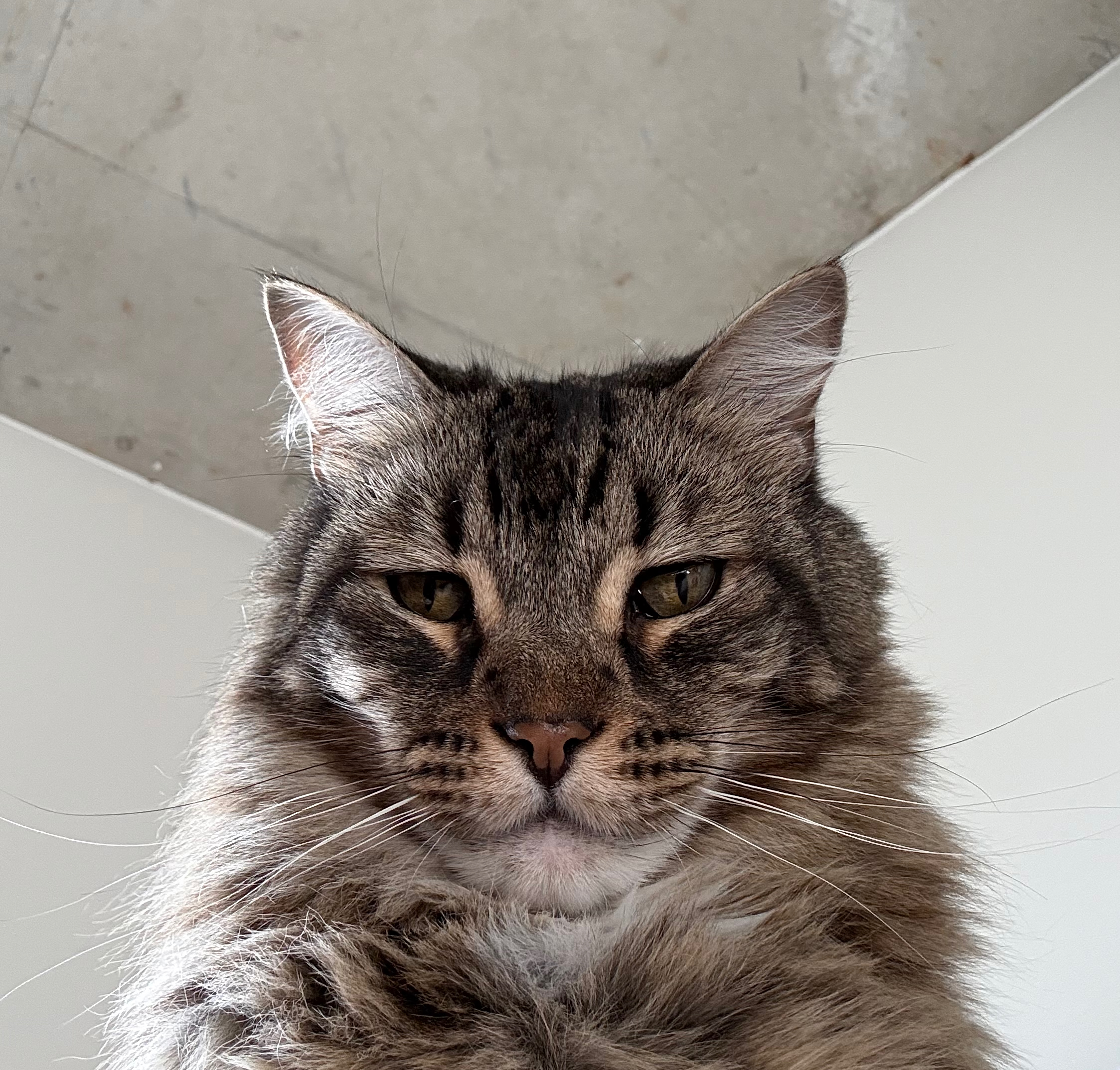
I live in Seattle. Away from mathematics and statistics, I enjoy baking, making espresso, collecting ceramics, reading, and spending time with my cat, Blue.